
Learn more about the people behind the DVTI+CAM project and its history.
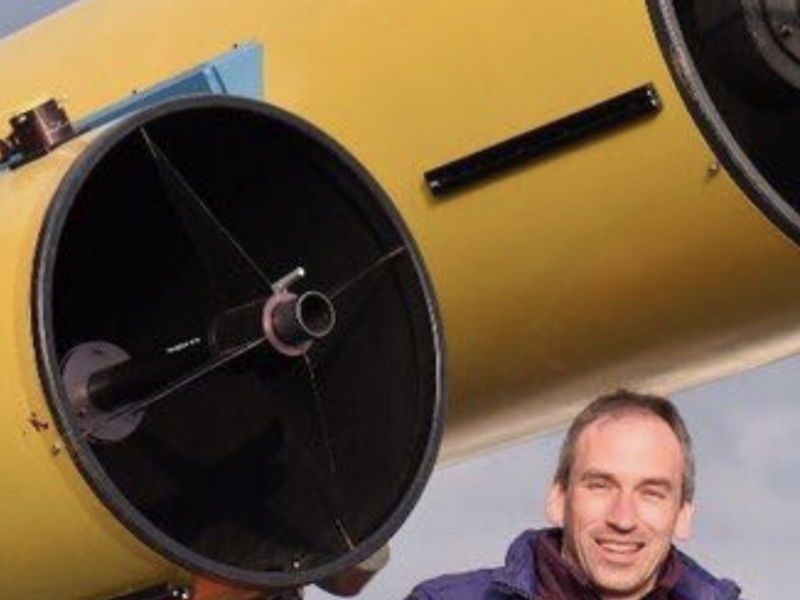
Stefan Meister
Working for Mettler-Toledo in Finance & Control
In the board of the Swiss Astronomical Society(SAG/SAS) and active in various working groups (sun, meteors, exoplanets)
Other hobbies: Cycling, Kayaking

Andreas Schweizer
Co-owner at software engineering firm Classy Code GmbH
Owner at Schweizer Technik Manufaktur GmbH
AGZU member (association that operates the Sternwarte Bülach)
Other hobbies: Amateur radio (HB9DPA), skiing
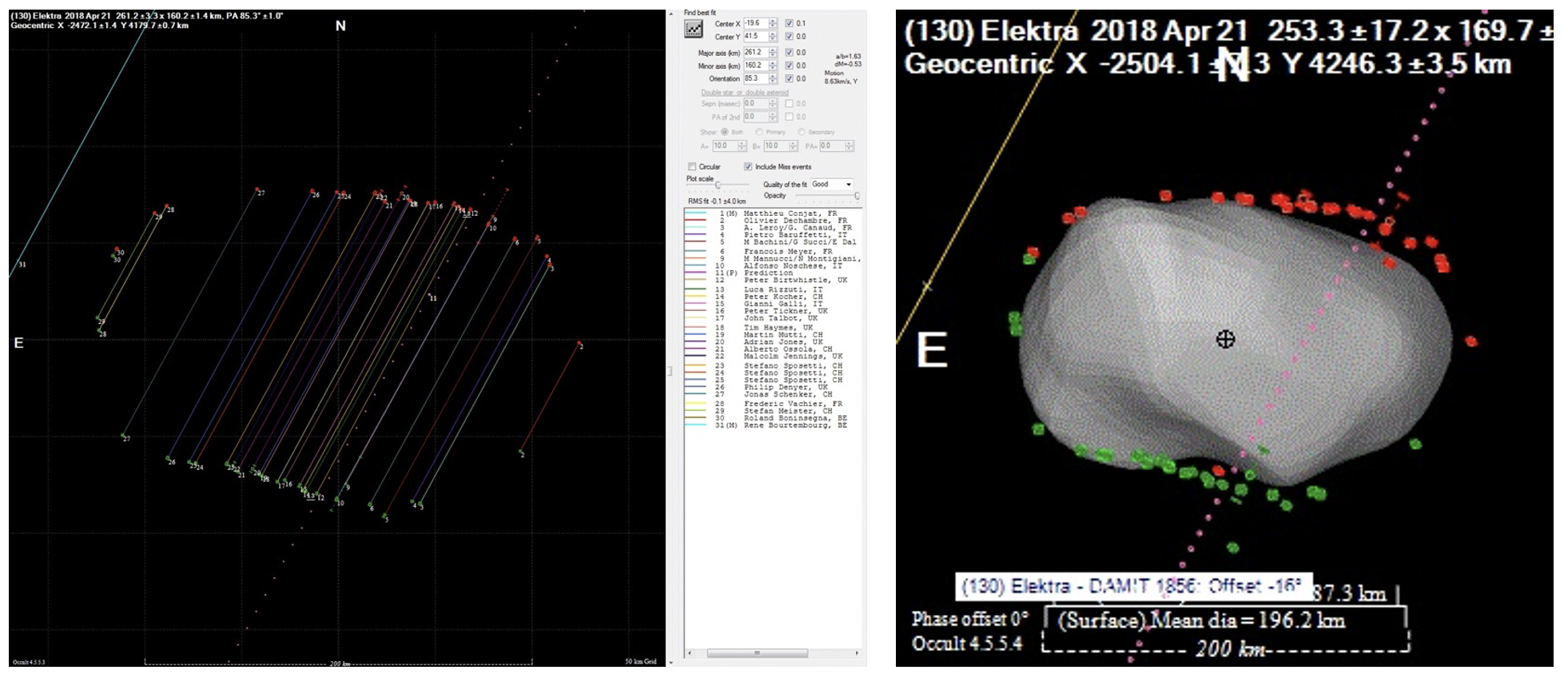
The Swiss DVTI camera project started in 2018 with the observation of (130) Elektra at the Buelach observatory by Stefan. He had observed stellar occultations before and was in possession of the necessary equipment (Watec camera, VTI device, frame grabber etc.). For Andreas, this was the first occultation.
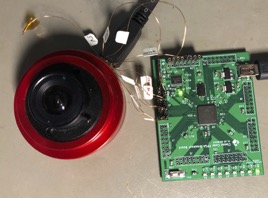
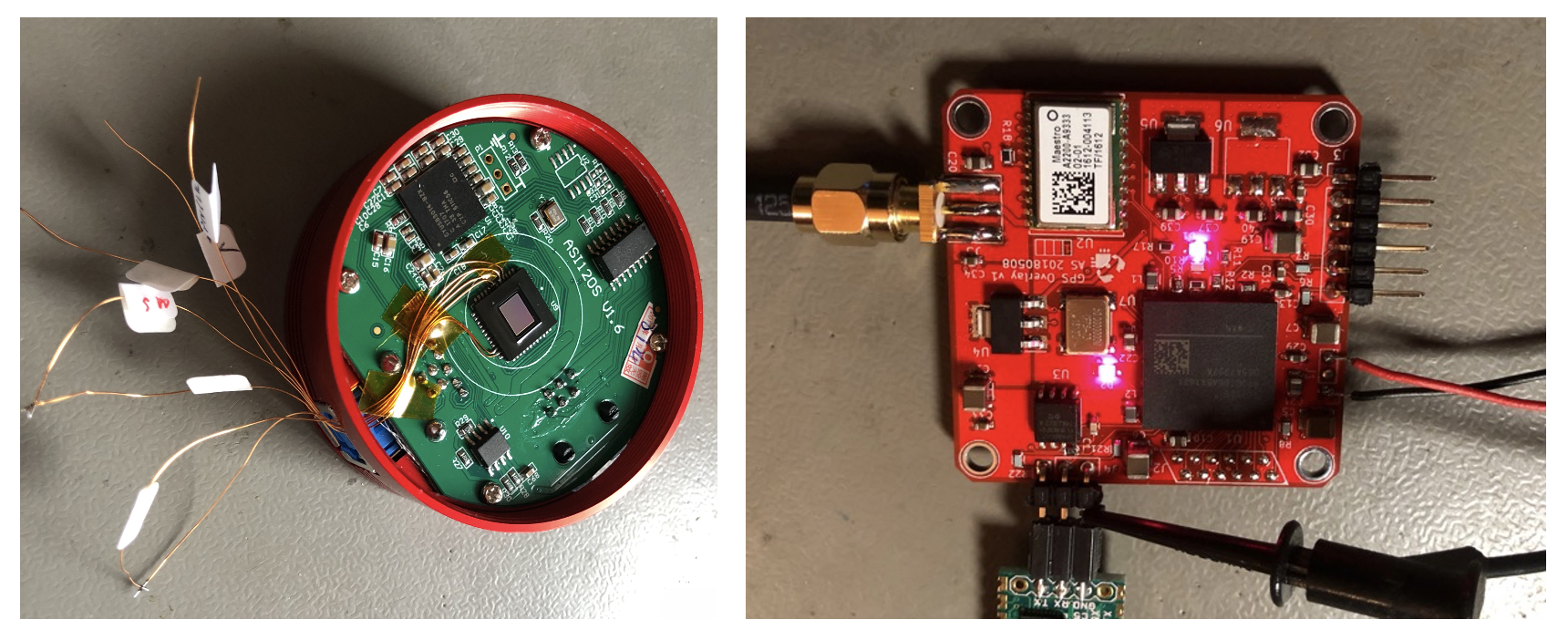
We discussed about the complex setup with many devices and cables. Stefan explained that this setup was needed because digital cameras where the timestamp would only be added on the PC would create inaccurate results because of the undefined time delays over USB, in the driver software, offset of the PC time and so on. A perfect camera would have to timestamp the image as it leaves the image sensor. Within a few days, we had a working prototype of a modified ASI120MM where digital data was overlayed on the image frame.
Motivated by the early success, we decided to design a small add-on board which people could attach to an existing ASI120MM camera. They'd only have to cut a few traces and feed them through the board.
We realized that for many people it would be difficult to do this modification and to build the VTI board. It would be much easier and useful for more people to have a complete camera which includes the VTI electronics, so we started designing a simple monochrome camera, similar to the ASI120MM and based on a similar image sensor (AR0130 instead of MT9M034). By september 2018, a working prototype was ready, in a simple 3d-printed case.
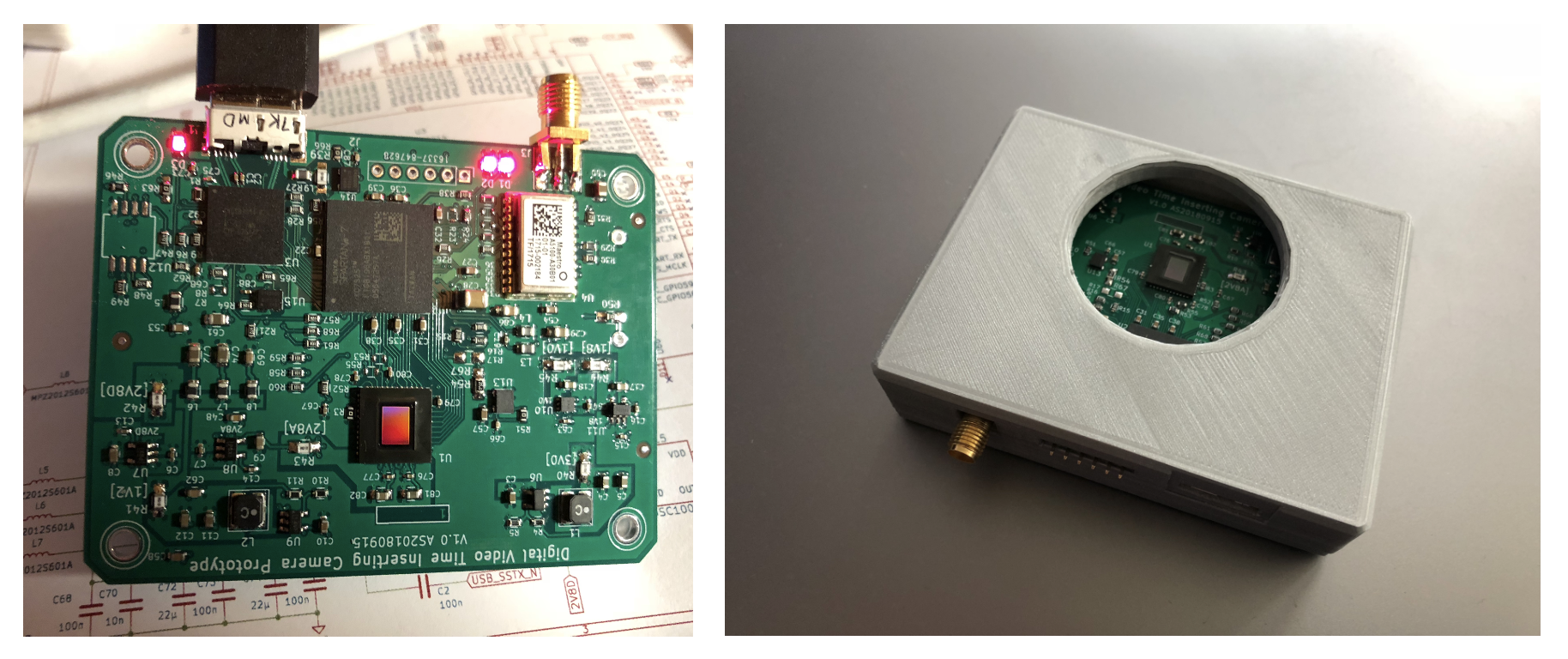
We presented the idea and the prototype in october 2018 at the meeting of the Swiss Occultation and Timing association (SOTA) meeting and received a lot of feedback. "Good idea, but the image sensor is too small!" - "It should be round and have a small diameter, so that it can be used in the prime focus!" - "cooling! usb hub! sd card!" It was clear that we had to re-design the camera from scratch to get something useful. Unfortunately, it was very difficult to get technical data sheets and and samples of more interesting image sensors, for example the IMX174 which we had planned to use in the next prototype version. Luckily, we found a German company which could help us. After signing a non-disclosure agreement, we got the datasheets and small number of image sensors. During the development of the V2 prototype, we also decided to create a control software specifically for this camera and optimized for observing occultations. So there was a lot of work and progress slowed down a bit.
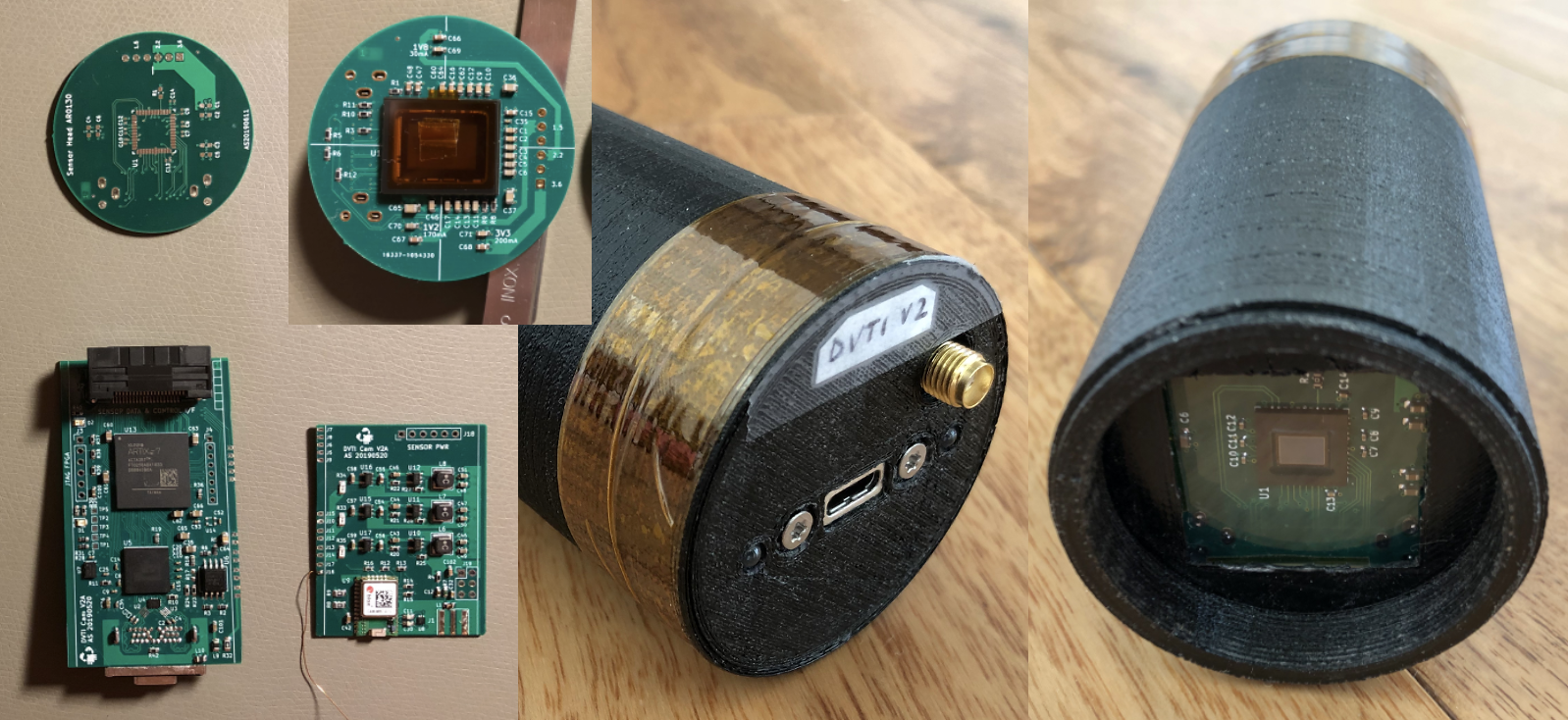
At ESOP2019 in Paris, in August 2019, we could present the project to a broader audience. We found several people who offered to test the camera and provided a lot of useful feedback. From the feedback, we created the V3 prototype, which we hoped would be the camera that people could finally buy. In summer 2020, the new prototype was ready.
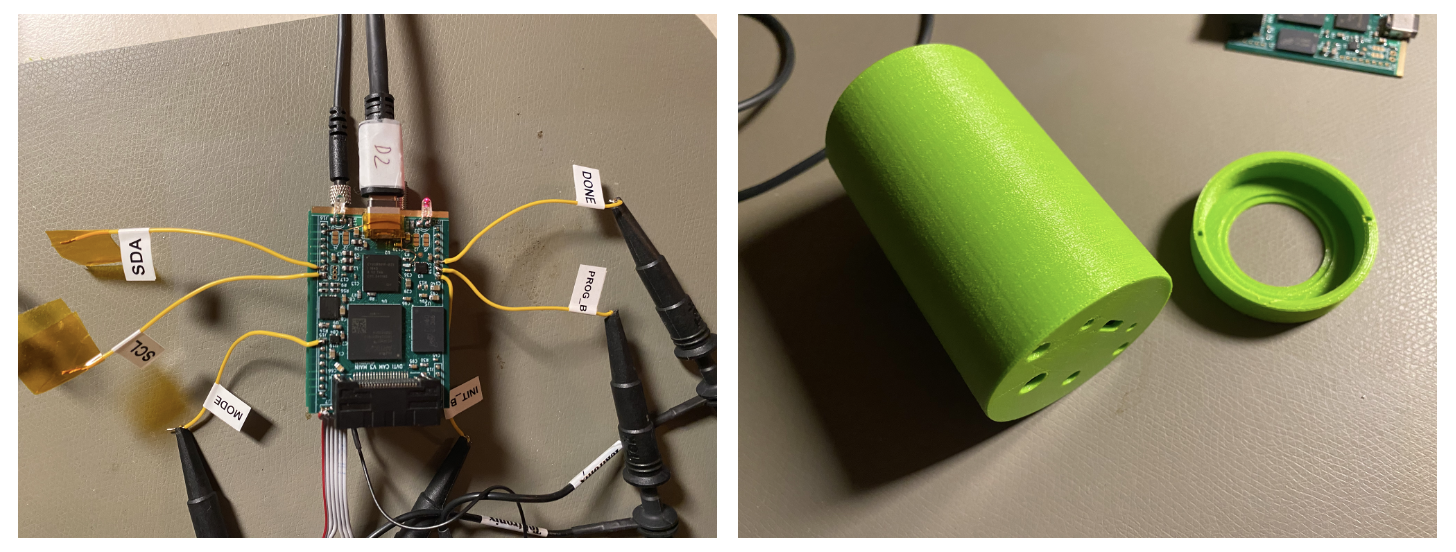
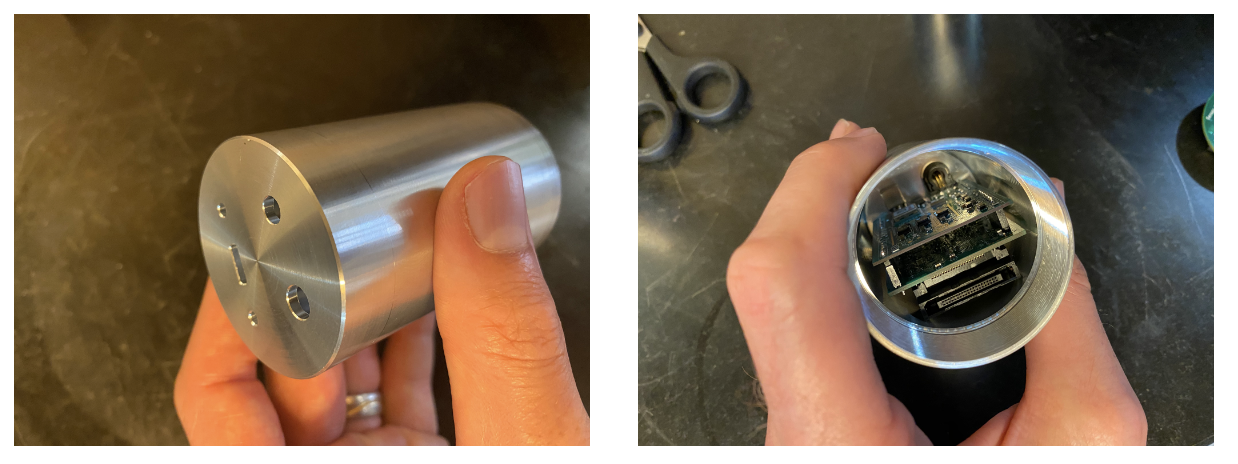
What we underestimated was the additional effort needed to get from a working prototype to something that people can actually buy. To sell an electronic product, it needs to comply to various regulatory standards. It also needs a more robust case in place of the 3d printed plastic case, nice packaging, a website with product information and last but not least, a "legal person" which would sell the camera and could be hold responsible in case of damages. We started with the easy part, the aluminium case. We were lucky and found a friend of a friend who had the necessary equipment and offered to help us at a good price.
For the EMC testing, in February 2021, we hired a specialist company to perform measurements on the camera. They found various unintended emissions which were higher than the limit in Europe. It is actually very easy to get such emissions from a high-speed electronic board, and especially the connection to the image sensor (300 MHz) and the USB connection (5 GHz) are good candidates and require careful design in order not to act as antennas.
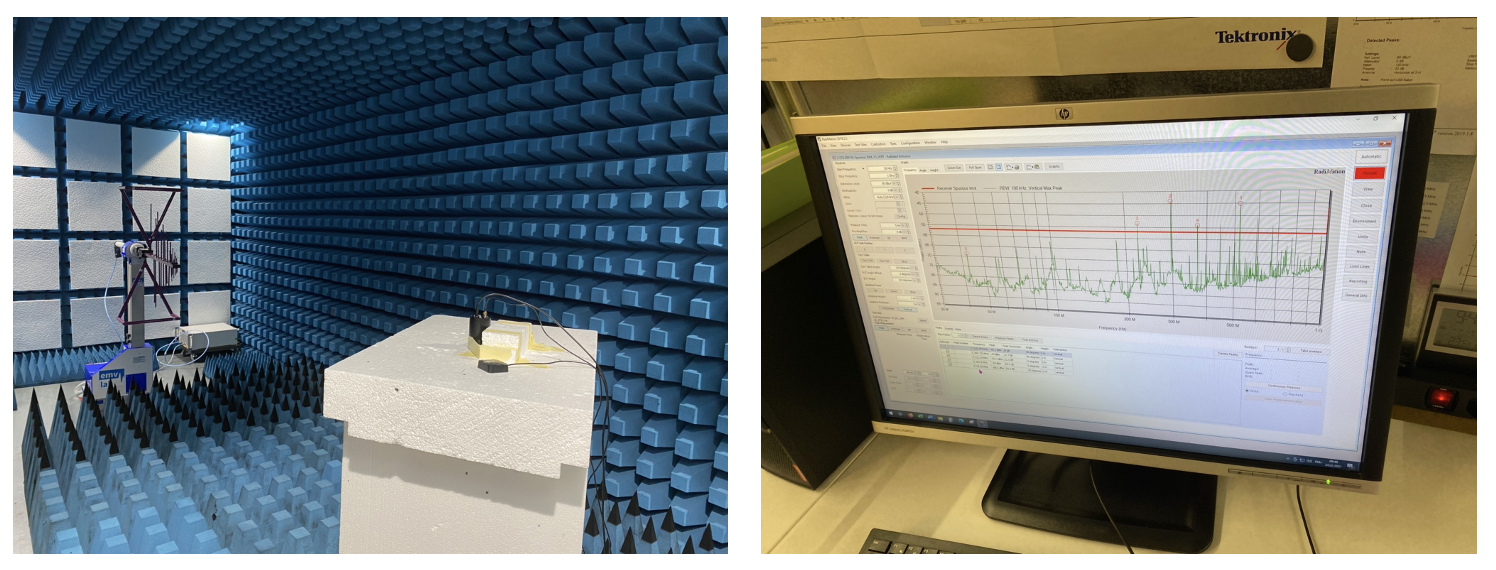
Luckily, all emissions were caused by a single clock line which wasn't properly designed. But still, we needed an additional design iteration. At the same time, we could also improve other minor issues that we had found in the V3 prototype. In early 2021, we realized that multiple components needed for the camera started to get more and more difficult to buy, for example the FPGA, USB controller, and an LDO. In the newspapers, this was called the "semiconductor shortage". At the time we realized this was a problem, it was already impossible to get the specific FPGA we had planned to use, so we had to switch to a different but similar model which was still available. In April 2021, we decided to produce 25 camera boards. Only 2 weeks later, the components were no longer available and the expected date for new components slipped to early 2022. In June 2021, the cameras were mostly assembled.
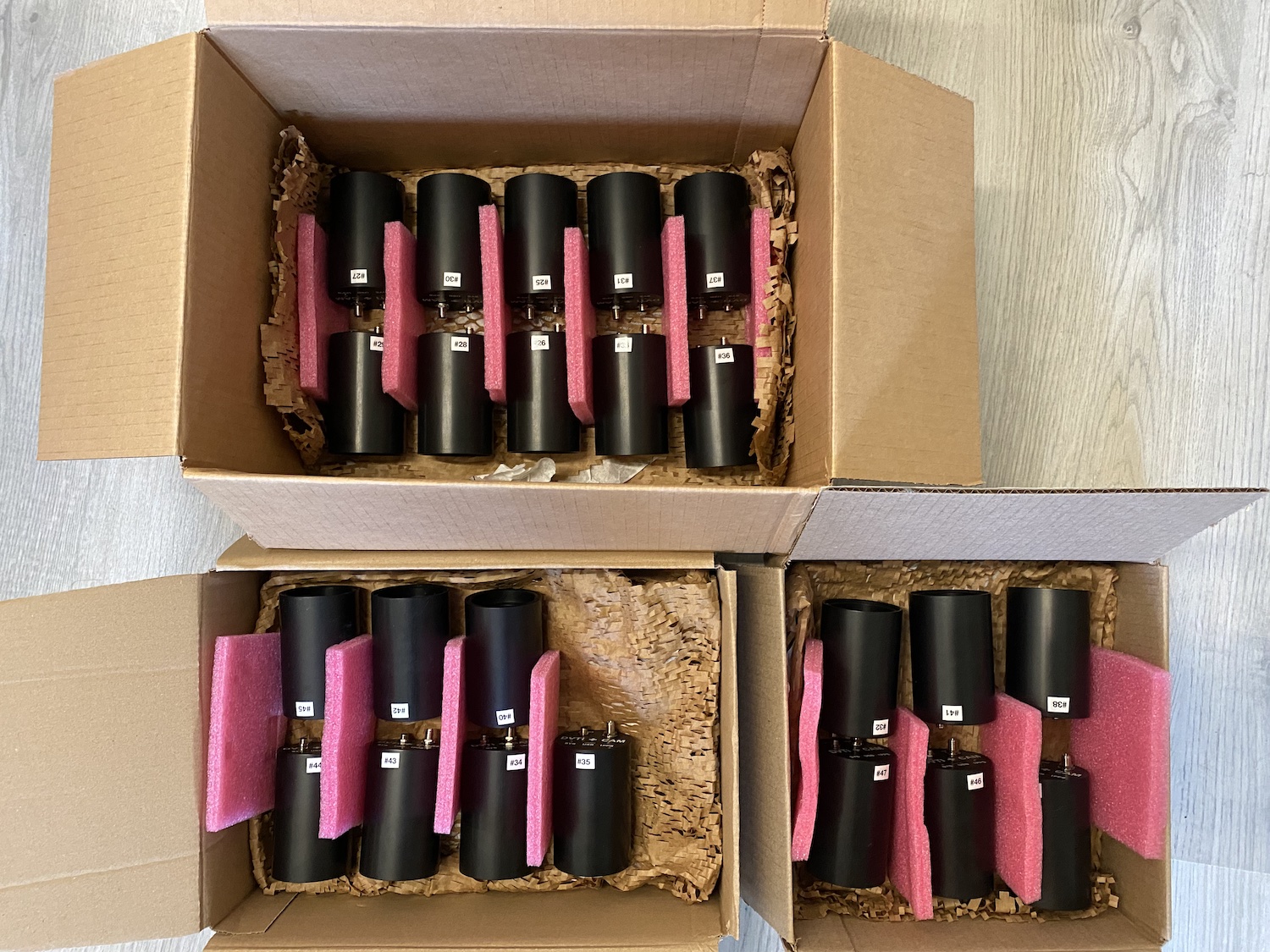
What remained to be done was to set up this web page, create the "legal person", documentation material and more.